Digital Trade Insights Q3 2026
In our latest quarterly issue: MLETR-aligned reforms continue to gain ground, now covering 62.5% of global exports, while more countries advance new frameworks for digital trade documents; calls for accelerating and broadening cross-platform interoperability emerge, prompting fresh thinking on standards, platform-agnostic trade records and the risk of AI-driven ‘digital islands’; industry voices make the case for trade digitalization as both a resilience play and a growth engine, with up to USD2.8 trillion in annual trade gains at stake – plus much more! + SUBSCRIBE
Industry News & Views
 An update on the legal adoption of electronic trade documents: MLETR architect Luca Castellani explains how uneven national legislation creates friction in cross-border trade, and how international bodies are actively developing uniform technical standards and cross-border legal treaties to overcome adoption hurdles and accelerate global trade digitalization (source: TFG).
 Insight report: Future of Trade: According to a recent Standard Chartered & Oxford Economics report, accelerating trade digitalization by lowering trade frictions, plus strengthening technology investment across artificial intelligence, digital currencies and tokenization, could add USD2.8 trillion to international trade each year (source: Standard Chartered).
 Trade Digitalization Index: UN Regional Commissions and UNCTAD have launched the latest Trade Digitalization Index for 170 economies, measuring global average implementation of trade digitalization at 55%, with digitalization rising in all regions but wide gaps remaining in paperless trade and cross-border data exchange (source: UN).
 Sibos 2026: Why tokenization and trade digitalization might finally be within reach: HSBC’s Chief Product Officer, Bhrigu Singh, sets out how legal reform, standards and tokenization could finally connect electronic bills of lading (eBLs), trade finance and payments, and what it will take to unlock adoptio (source: FinTech Futures).
 Bespoke bank AI reignites digital trade fragmentation concerns: Coverage from a recent panel at the GTR Asia event in Singapore, where industry experts discussed whether banks’ growing use of bespoke AI tools will help connect the disjointed trade finance ecosystem or simply create another generation of digital islands (source: GTR).
 BB introduces pilot program for digitalization of trade documents: Bangladesh’s central bank has launched a pilot framework enabling electronic processing of trade documents under LCs and documentary collections – issuing a circular stating that the framework will allow e-submission, transmission, and verification of trade docs across approved international trade corridors (source: The Daily Star).
 Canada takes a major step towards paperless trade: Examining how Canada’s proposed Enabling Digital Trade Act closely follows MLETR principles, whilst also going beyond the digitalization of transferable documents and instruments by including provisions for the submission of import/export-related information to government bodies in electronic form (source: TTP).
 BIMCO updates its open source eBL Standard to support the next stage of digital trade: The industry body recently updated its electronic bill of lading standard for the bulk shipping sector, aiming to further support platform interoperability and the transition from paper to digital trade documentation (source: BIMCO).
 When airspace closes, paper stops: why trade digitalization is now a resilience play: HSBC’s Venkatraman P. makes the case for trade digitalization as a resilience play, highlighting how courier-dependent paper documents always stall under disruption, whereas trade digitalization – supported by legislation, standards, reliable systems, interoperability, and growing adoption – is what keeps commerce moving when physical paper cannot (source: Venkatraman P. via LinkedIn).
 Forging a turning point for trade digitalization: ICC DSI Managing Director, Pamela Mar, notes that MLETR-aligned reforms now cover 62.5% of global exports, but that interoperability between platforms remains a barrier to scale, prompting the ICC DSI to take a step back and consider ‘a different approach, one that involves rethinking the trade records and rethinking the need to bind the record to specific platforms’ (source: TFG).
 Trade finance results: Banks see strong loan demand: GTR’s review of banks’ half-year 2026 results points to rising demand for trade lending, supported by higher commodity prices and increased trade activity, though there are signs of weakening in the Middle East after months of disruption to shipping and supply chains (source: GTR).
 $35tn trade network faces a digital coordination gap, ShipsFocus says: VC fund ShipsFocus’ annual report explores how maritime digitalization has reached a point where shipowners and managers need to look beyond individual applications and address the gaps between vessels, systems, people and physical operations, proposing a ‘Maritime Digital Infrastructure’ (MDI) framework allowing multiple networks to coordinate while retaining their autonomy (source: Digital Ship).
ICE Digital Trade News
 ICE Digital Trade’s eBL solution complies with China's Maritime Code (2025 Revision): Independently certified as compliant by Shanghai-based maritime law firm Sloma & Co, this certification, alongside our IG P&I Club approval, now enables ICE customers to use Chinese law governed eBLs – opening a significant segment of global container trade to digital documentation and strengthening cross-platform eBL interoperability.
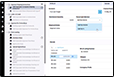 Digitizing shipping and post-trade operations for the Potash sector: Showcasing how our DT4 solution digitizes fragmented, part-digital processes that hamper post-trade operations in potash logistics. Configurable to any transport mode, DT4 digitizes multi-party workflows on a low-code platform, streamlining communications, task prioritization and handovers across every team and service provider.
 Webinar - eBL interoperability at scale: How it works and how to join: Join HSBC, ICE Digital Trade, IQAX and GSBN on 27 October 2026 to see how cross-platform document exchange and electronic Presentation work in practice, with real-world operational use cases and routes to participation.
 ICE Launches New VLCC Tanker and Container Freight Contracts as Customers Hedge Freight Risk Across Global Trade Routes: Including the first futures on the TD34 Gulf of Oman to China and TD15 West Africa to China VLCC routes, giving market participants new ways to hedge freight risk as access through the Strait of Hormuz remains restricted.
ICE Digital Trade in Numbers